
Museums and archives manage temperature and relative humidity by matching environmental control to the materials in the collection, the building’s capabilities, visitor and staff needs, and the risks created by excessive heat, dampness, dryness, or rapid change. The goal is not one universal thermostat setting; it is a documented preservation strategy supported by monitoring, HVAC operation, storage design, and conservation expertise.
Collection environments should be risk-based. Paper, photographs, film, metals, wood, paintings, textiles, plastics, and mixed objects respond differently to temperature and relative humidity. Facilities teams monitor conditions over time, limit harmful extremes and rapid changes, use specialized storage or microclimates where needed, and coordinate HVAC changes with conservators so energy goals do not create new preservation risks.
A Museum Is Not Just Another Comfort-Cooling Building
In a typical office, HVAC priorities center on occupant comfort, ventilation, indoor air quality, and energy. Museums and archives add a second client: the collection itself.
Objects can absorb and release moisture, corrode, crack, warp, embrittle, fade, or chemically degrade depending on material and environmental exposure. Those responses do not occur at the same rate or threshold for every object. A storage room full of paper records has different sensitivities from a gallery containing metal objects, wood furniture, oil paintings, photographic film, or mixed-media works.
The Canadian Conservation Institute’s ClimaSpec climate guidance reflects this risk-based approach. It provides temperature and relative-humidity recommendations tailored to collection type rather than prescribing one rigid condition for every institution.
Relative Humidity Often Matters More Than a Single Temperature Number
Relative humidity, or RH, describes how much moisture the air contains relative to the maximum it could hold at that temperature. Because RH changes when temperature changes, temperature control and moisture control are linked even when the preservation risks are different.
Organic materials such as wood, paper, leather, and textiles can take up or release moisture as RH changes. Metals may be vulnerable to corrosion above certain moisture conditions. Some photographic and plastic materials are more strongly affected by temperature because lower storage temperatures can slow chemical deterioration.
The Canadian Conservation Institute’s detailed resource on incorrect relative humidity explains why a single “correct” RH may not exist for mixed collections. The most useful target is often the one that reduces the highest risks for the specific materials while remaining achievable for the building.
That is a major operational point. A facility that cannot hold an extremely narrow RH band should not automatically be considered uncontrolled. Stable, well-monitored conditions that avoid damaging extremes may be more sustainable and more realistic than a rigid target that the HVAC system repeatedly overshoots.
Monitoring Comes Before Aggressive Control
Facilities teams need data before changing control sequences. Temperature and RH sensors or data loggers can reveal daily cycles, seasonal drift, local hot or damp pockets, equipment failures, door-opening effects, and differences between galleries, storage rooms, and cases.
Good monitoring practice includes:
- Using calibrated or quality-checked sensors appropriate to the purpose.
- Recording conditions at intervals that reveal short and long-term change.
- Placing sensors where they represent collection conditions, not directly in supply-air jets or against exterior walls unless those locations are under study.
- Keeping location, calibration, and sensor-change records.
- Reviewing trends rather than only current values.
- Linking environmental excursions to weather, occupancy, maintenance, and HVAC events.
The logic resembles commercial building analytics, but the stakes are different. Building automation can help commercial HVAC use less energy by trending conditions and equipment behavior; in a museum, those same tools can support preservation when trend data is interpreted with conservation requirements.
HVAC Systems Control More Than Room Temperature
A museum HVAC system may need to manage sensible cooling, heating, dehumidification, humidification, filtration, ventilation, pressure relationships, and air distribution. The control sequence must consider both collection and occupant loads.
Challenges can include:
- Large visitor swings during events.
- Exterior doors opening frequently.
- Solar gain through historic glazing.
- High ceilings and stratification.
- Storage areas with low occupancy but strict environmental needs.
- Historic structures with limited vapor control or insulation.
- Different requirements for galleries, archives, conservation labs, and cold storage.
A powerful central system does not guarantee good collection conditions if the building envelope allows moisture intrusion or large thermal swings. Insulation, air leakage, vapor movement, and envelope moisture must be considered alongside mechanical control.
Microclimates Can Reduce the Burden on Whole-Building HVAC
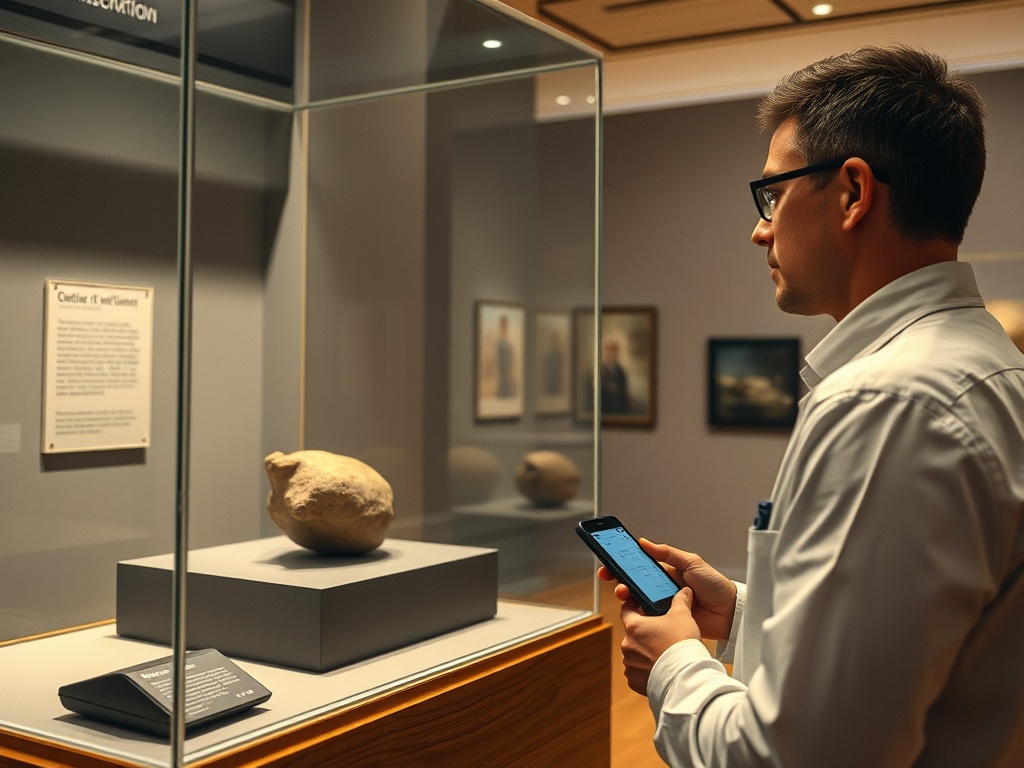
Not every object needs the same room condition. Sensitive materials can sometimes be protected in sealed display cases, storage cabinets, enclosures, or purpose-built cold rooms. Buffers such as conditioned silica gel can help moderate RH inside a case when properly designed and maintained.
The National Park Service’s museum environmental guidance describes microenvironments as a way to stabilize conditions for sensitive objects and notes that HVAC design should protect both collections and the building. This approach can be especially useful in historic structures where forcing the entire building to a narrow indoor condition could increase condensation or envelope damage.
Microclimates require their own monitoring and maintenance. A sealed case that leaks, a saturated buffer, or a failed cold-storage unit can create a hidden problem if staff assume the enclosure is working indefinitely.
Avoid Chasing Short-Term Fluctuations With Aggressive HVAC Response
Control systems that react too aggressively can create oscillation. A humidifier overshoots, dehumidification responds, and the space cycles around a setpoint. Similar hunting can occur with temperature.
Facilities teams should distinguish between harmless measurement noise, expected occupancy-driven movement, and changes that threaten collection materials. Alarm limits can be tiered so staff are not overwhelmed by every small deviation.
Energy Management Has to Respect Collection Risk
Museums face the same pressure as other buildings to reduce energy use and operating cost. Setback strategies, wider seasonal bands, optimized equipment schedules, heat recovery, improved envelope performance, and control tuning can help, but changes should be evaluated with conservators and building engineers.
Some collections tolerate wider conditions than older museum practice assumed; others need tighter control or lower temperatures. The Canadian Conservation Institute’s current guidance explicitly frames climate control around preservation risk and sustainability rather than a universal rigid target.
Remote monitoring can also help institutions with multiple buildings or off-site storage. The governance, alarm, and cybersecurity considerations in remote HVAC management for multi-site businesses become relevant when collection environments are monitored from central facilities teams.
Plan for Failure, Not Just Normal Operation
Museums should know what happens during a power outage, chiller failure, humidifier fault, frozen coil, network outage, flood, or extended door opening. Emergency plans should identify which spaces and collections are most vulnerable, what conditions trigger escalation, and who has authority to move objects or change HVAC operation.
Service contracts and warranty coverage may help with equipment repair but should not be confused with preservation planning. The decision factors in extended HVAC warranty coverage are relevant to equipment ownership, while collection protection requires a separate response plan.
Build Environmental Targets From Collection Risk
A strong next step is an interdisciplinary environmental review involving facilities staff, a conservator, collection managers, and HVAC professionals. Identify the most sensitive collections, examine at least a year of temperature and RH data where possible, map problem zones, and define acceptable operating ranges and alarm thresholds for each space.
The result should be a control strategy the building can actually maintain, with clear reasons behind each target. Museums protect collections best when climate control is treated as a monitored risk-management system rather than a single thermostat number.
Informational disclaimer: This article is for educational purposes and does not constitute conservation, HVAC engineering, architectural, structural, electrical, building-code, insurance, or legal advice. Collection requirements and acceptable environmental ranges vary by material, institution, building, and climate. Consult qualified conservators and building professionals for site-specific guidance.