
Cluster: Future Trends & Emerging Hospitality Models | Content Type: Case Study | Search Intent: Informational
Successful hybrid stay concepts work when the property is designed around overlapping guest needs rather than a vague promise to be “part hotel, part something else.” The clearest examples combine accommodation with extended-stay features, workspaces, social areas, residential components, or membership-style amenities in ways that guests can understand and operators can support.
Hybrid-model takeaway
- Start with the guest use cases the property must serve, then decide which spaces and services should overlap.
- Give long-stay, work, leisure, and local-community users clear boundaries as well as shared zones.
- Judge a hybrid concept by operating logic and demand fit, not by the number of functions packed into the building.
Hybrid hospitality needs a sharper definition
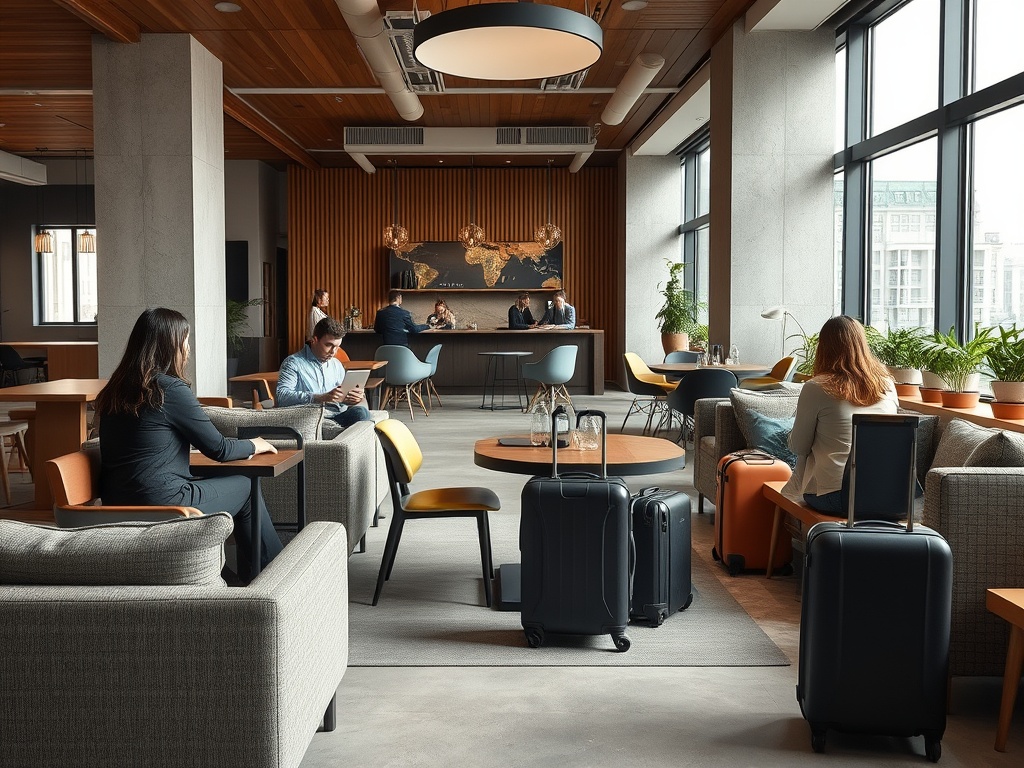
The term can describe several models: an extended-stay hotel with social workspaces, a mixed-use project with a hotel and branded residences, a property combining short stays with coworking, or a hospitality-led building that also includes private clubs and community programming. These models are not interchangeable. Each has different staffing, access, cleaning, storage, technology, and revenue requirements.
Accor’s One Living platform is a useful large-scale example because the company explicitly groups branded residences, hotels and resorts, extended-stay hotels, coworking offerings, private clubs, and other mixed-use products within one development and operating framework. Accor presents the model as a way to create complementary hospitality products. That is a corporate development thesis, not proof that every mixed-use project will perform better, but it shows how operators are formalizing hybrid hospitality beyond a simple lobby coworking table.
Case pattern: make extended stay feel social, not institutional
Hyatt House provides a different angle. When Hyatt introduced the brand, it described a contemporary extended-stay environment informed by consumer research and intended to help guests feel connected, welcome, and at home. The model combines the functional needs of longer stays with shared social space. For hybrid-hospitality planning, the transferable lesson is that extended stay does not have to mean only a larger room and a kitchenette; common areas and daily routines can also be designed for guests who live at the property for longer periods.
Accor has more recently discussed “blended living” as travel patterns increasingly combine work, leisure, and longer stays. The company’s blended-living strategy discussion reflects an operator view of this market rather than an independent forecast, so its projections should be read as corporate analysis. Still, it is useful for identifying the service questions a property must answer: where people work, how they eat, how long they stay, and which amenities matter after the novelty of arrival has worn off.
Design around daily rhythms
A hybrid property should be tested hour by hour. At 7 a.m., some guests may need breakfast and quiet calls. At noon, local members could use coworking areas while overnight guests return between meetings. In the evening, a lounge may shift toward food, drinks, or social programming. The same square footage can support several uses, but only if power, acoustics, lighting, furniture, cleaning, and service access were planned for those transitions.
- Work zones need reliable power, comfortable task seating, acoustic control, and a way to distinguish focused work from casual social use.
- Longer-stay rooms benefit from storage, laundry access, food-preparation options where appropriate, and housekeeping schedules that match how residents actually live.
- Shared kitchens, lounges, terraces, and clubs need rules for access, guest privileges, events, cleaning, and peak demand.
- Residential and hotel components need clear back-of-house boundaries, security logic, service standards, and ownership responsibilities.

Use zoning to prevent one audience from degrading another
The risk in a hybrid concept is not that uses are mixed; it is that they are mixed without hierarchy. A lively lobby can be attractive to short-stay guests but frustrating to someone trying to work. A coworking zone can create energy but reduce the sense of privacy expected by a premium residential user. A club may add local demand while making hotel guests feel like outsiders if access is poorly explained.
This is where better guest messaging flows become part of the concept rather than a separate technology project. Guests need to know what is included, what requires reservations, which areas have restricted access, and when a shared space changes function. Clear digital communication can reduce the amount of signage and repeated staff explanation needed on property.
Treat hybrid revenue as a portfolio, not a single room metric
Traditional room indicators still matter, but a hybrid model may also produce membership revenue, food-and-beverage spend, meeting-room use, longer lengths of stay, residential service fees, or ancillary purchases. Operators should avoid claiming that these streams automatically make a project more profitable. The cost side can also grow through additional staffing, programming, technology, cleaning, security, and maintenance.
For a case study, show the relationship between the space and the commercial model. If a coworking lounge is meant to support day passes, measure utilization by time of day and the operating cost of serving nonresident users. If extended stays are central, track storage requests, housekeeping preferences, laundry demand, and length-of-stay patterns. If public programming is intended to bring local traffic, assess whether it complements or interferes with guest-only areas.
Hybrid concepts can also revive existing assets
Not every hybrid project needs to be ground-up development. A property undergoing a value-add turnaround may identify underused meeting rooms, oversized lobbies, or obsolete business centers that could be redesigned for flexible work, longer-stay support, or member programming. The case for conversion should come from local demand and building constraints, not from copying a fashionable concept.
| Use case | Space requirement | Operating question |
|---|---|---|
| Short business stay | Fast work setup plus easy arrival | Can the guest work immediately without occupying dining space? |
| Extended stay | Storage, food prep, laundry, flexible housekeeping | Which services change after the first week? |
| Local coworking/member use | Access-controlled shared workspace | How are hotel guests prioritized during peak periods? |
| Residential component | Private circulation plus hotel-service interfaces | Which services are shared and who is accountable? |
Build the concept from demand, not labels
The strongest hybrid hospitality case studies are specific about who uses the building, when they use it, and why the overlap is valuable. Start with two or three defined audiences, map their daily needs, and identify the spaces they can genuinely share. Then test the operating cost and service complexity before expanding the concept.
If the model depends on attracting guests directly, the commercial experience must support the unusual product. The lessons in boosting direct revenue apply here because a hybrid stay can be harder to explain in a standard room-and-rate grid. Clear packages, accurate descriptions, and direct communication are often necessary to make the concept understandable before arrival.
Prove the overlap before scaling it
A practical next move is to pilot one hybrid function in an existing property: convert a low-use business center into a bookable work lounge, test longer-stay housekeeping options on one floor, or program a lobby zone for local use during defined hours. Measure demand, guest conflict, staff workload, and spend patterns. A small pilot reveals whether the “hybrid” idea creates useful overlap or simply adds another layer of complexity.