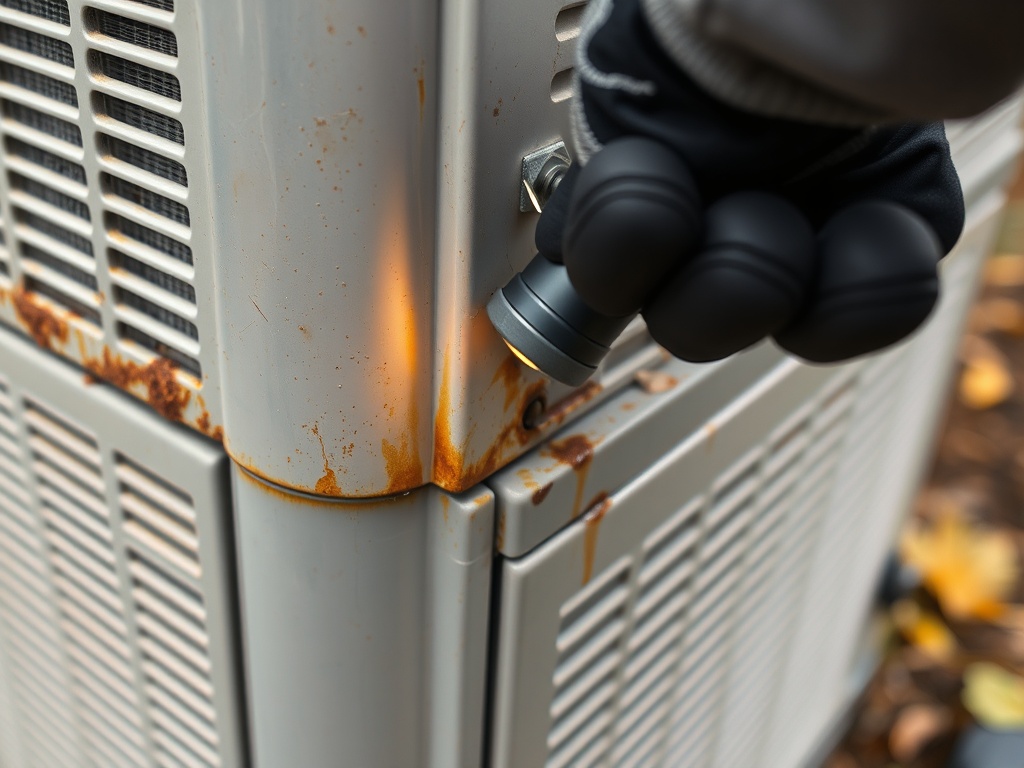

Corrosion on HVAC equipment can begin as discoloration, surface oxidation, or residue and progress into weakened metal, damaged electrical connections, blocked drainage, or refrigerant leaks. Homeowners can safely watch for visible changes, but corrosion on coils, refrigerant tubing, electrical terminals, burners, or concealed components should be evaluated by a qualified HVAC technician.
Look for new rust, green or blue copper staining, white powdery oxidation on aluminum, flaking metal, pitting, wet cabinet areas, deteriorated fasteners, and staining around condensate paths. Do not scrape, sand, chemically clean, or open refrigerant or electrical components without proper training. Moisture, salts, household contaminants, outdoor pollutants, and dissimilar metals can all contribute to corrosion.
Corrosion Is a Process, Not Just a Cosmetic Stain
Metal components in HVAC systems live in environments where moisture, temperature changes, condensate, outdoor air, cleaning products, and airborne contaminants may be present. Some oxidation stays superficial for a long time; other forms attack thin tubing, fins, electrical terminals, or fasteners until performance or containment is affected.
The practical goal is not to diagnose corrosion chemistry from a photograph. It is to notice changes early enough that a technician can determine whether the issue is cosmetic, environmental, or mechanically significant.
ASHRAE’s refrigerant-system chemistry guidance describes several corrosion mechanisms that can affect refrigeration equipment, including formicary corrosion in copper tubing when moisture and certain organic compounds are present. That type of damage can be microscopic and may not resemble ordinary red rust. This is one reason a clean-looking coil can still require professional leak testing when system symptoms point to refrigerant loss.
Where Homeowners Can Look Safely
A visual inspection can focus on accessible exterior surfaces while the equipment is off and without removing panels that expose energized parts. Useful areas include:
- The outdoor condenser or heat-pump cabinet and base pan.
- Accessible refrigerant line insulation and exposed copper near service connections.
- Condensate drain fittings and the area around the indoor unit.
- Visible duct transitions, screws, hangers, and drain pans.
- Furnace or boiler vent connectors that can be viewed without disassembly.
- Nearby plumbing, humidifiers, or drains that could be leaking onto equipment.
Document what you see with dated photos. Changes over weeks or months can be more informative than a single inspection. If a spot appears after a leak, flooding event, chemical spill, or coastal storm, tell the technician about the timing.
Do not remove access panels merely to look for corrosion. Electrical capacitors, line-voltage terminals, sharp sheet metal, hot surfaces, and refrigerant components can create hazards even when the system seems inactive.
What Different Visual Clues May Mean
Red or brown rust usually suggests iron or steel oxidation. On an outdoor cabinet, a small paint chip with surface rust may be mostly cosmetic, while heavy flaking on a structural base, drain pan, burner assembly, or vent component deserves closer attention.
Copper can develop darkening, greenish patina, or blue-green residue. Those colors alone do not prove a refrigerant leak. Oil residue, repeated moisture, pitting, or a confirmed loss of charge changes the concern level. White or chalky deposits can appear on aluminum or galvanized surfaces and may indicate oxidation, mineral residue, or dried condensate contamination.
Coils deserve special care because their tubing and fins are thin. Carrier’s consumer information on evaporator coils and corrosion notes that condensation and contaminants can contribute to coil corrosion. Household cleaning chemicals can also damage coil materials if inappropriate products are used. Avoid spraying general-purpose cleaners onto coils unless the equipment manufacturer specifically permits them.
Moisture Is Often the First Clue
Corrosion frequently follows a moisture problem. Look for a blocked condensate drain, cracked drain pan, sweating uninsulated suction line, roof leak above an air handler, standing water around a furnace, or sprinkler overspray on the outdoor unit. Correcting the moisture source can matter as much as treating the visible metal.
Condensation can also appear when humid air meets a cold metal surface. That may be normal in a designed drainage path, but it becomes a problem when water escapes that path and repeatedly wets cabinet seams, screws, insulation, controls, or adjacent building materials.
A system that has developed water around the indoor unit should be inspected promptly, especially if the drain pan is rusted or the unit is above a finished ceiling. The same moisture that causes corrosion can also damage drywall, framing, flooring, or electrical components.
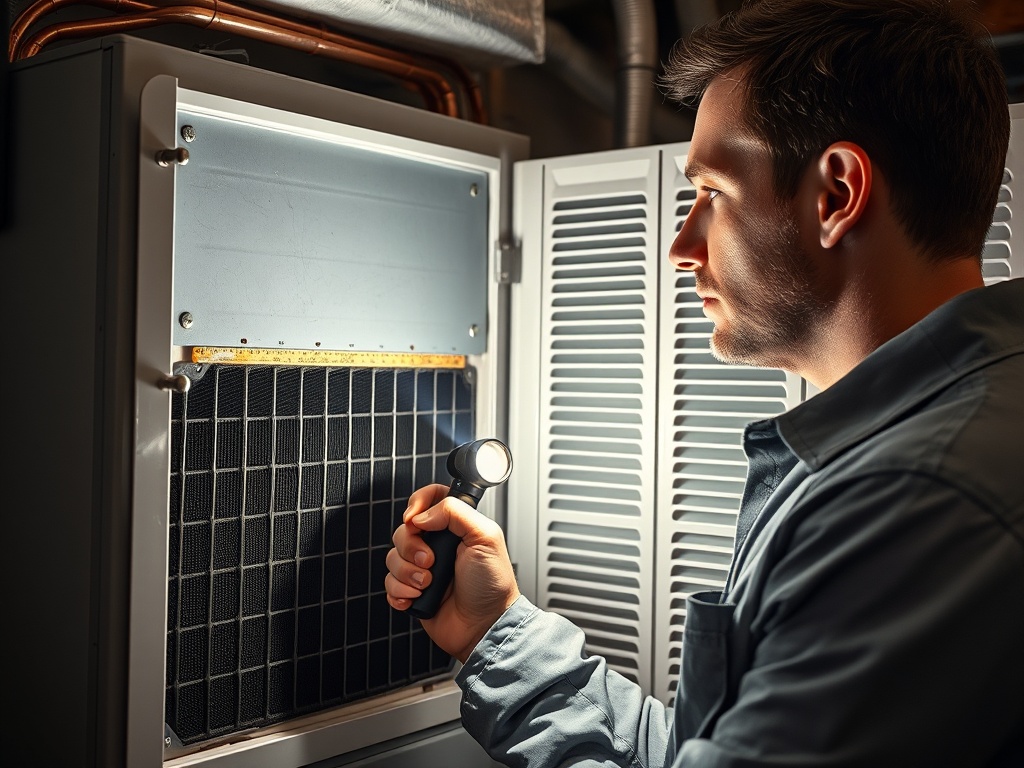
A Simple Corrosion Triage Checklist
Use the following sequence without touching questionable components:
1. Compare with older photos if available. New or rapidly expanding corrosion deserves more attention than stable surface discoloration.
2. Find obvious water sources. Look for leaks, clogged drains, condensation outside intended drain paths, irrigation, or weather exposure.
3. Notice location. Corrosion on a cabinet corner is different from pitting on refrigerant tubing, a heat exchanger, electrical terminals, or a flue connection.
4. Watch for operating symptoms. Reduced cooling, repeated icing, unusual odor, water leakage, breaker trips, or loss of heating can make visible corrosion more significant.
5. Stop if the inspection requires disassembly. Internal testing belongs to a trained technician.
6. Ask for the cause, not only a cleanup. If a part is replaced, identify what environmental or drainage condition may have contributed.
Corrosion can also appear alongside other warning signs. A rattle caused by a deteriorating panel or a grinding sound from a bearing may be unrelated, but a sudden change in sound should be evaluated using the symptom-based approach in why an HVAC system can suddenly become loud.
Coastal and Chemical Environments Need Extra Attention
Salt-laden air can accelerate corrosion on outdoor equipment near coasts. Industrial pollutants, pool chemicals, fertilizers, cleaning agents, animal areas, and some stored household products can also create harsher environments. Equipment selection, coil materials, coatings, placement, maintenance frequency, and rinsing practices should follow manufacturer guidance for the specific environment.
More cleaning is not automatically better. Strong acids, alkaline cleaners, bleach-containing products, abrasive pads, and pressure washing can damage fins, coatings, electrical parts, or tubing. A technician should use methods compatible with the equipment material and manufacturer instructions.
Commercial facilities can use controls and maintenance data to catch water or performance problems earlier. When corrosion appears in a building with automation, alarms, humidity trends, condensate sensor history, and equipment runtime may help reveal the conditions that preceded it. That relationship is discussed further in how building automation helps commercial HVAC use less energy.
When Corrosion Becomes a Safety Issue
Some locations should be treated as urgent. Corrosion on combustion venting, a suspected furnace heat exchanger, gas piping, electrical terminals, a boiler pressure component, or structural supports can have safety implications. So can any condition associated with a carbon-monoxide alarm, gas odor, overheating, arcing, or repeated breaker trips.
If a carbon-monoxide alarm sounds, follow the alarm manufacturer’s emergency instructions and local emergency guidance rather than inspecting the furnace yourself. The limits of alarms and the role of fuel-burning equipment are explained in what carbon monoxide detectors do and do not tell you about HVAC safety.
Make Early Documentation Part of Maintenance
Once or twice a season, photograph accessible equipment surfaces, drains, line-set areas, and the outdoor cabinet. The goal is not obsessive inspection; it is establishing a visual baseline. During professional maintenance, point out any changed areas and ask whether the corrosion is superficial, requires cleaning or coating, or indicates part deterioration.
Early attention is most useful when it leads to a cause-based repair. Replacing a corroded fastener without addressing a leaking drain, salt exposure, or chemical source simply resets the clock.
Informational disclaimer: This article is for educational purposes and does not constitute professional HVAC, electrical, refrigeration, combustion, structural, building-code, or legal advice. Refrigerant circuits, energized equipment, gas systems, and combustion components require qualified service. Consult a licensed HVAC professional for equipment-specific evaluation.